
How child rights champions are sustaining fight against defilement in Kisii and Nyamira counties
By AGGREY OMBOKI
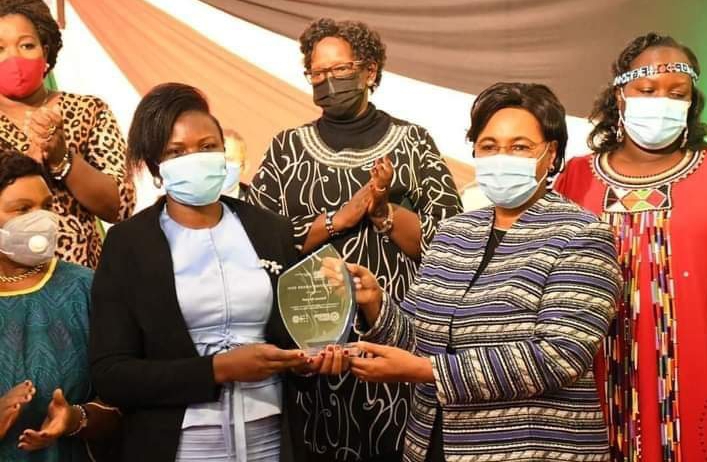
Ms Rebecca Basweti (second left) receives an award from Public Service and Gender Affairs Cabinet Secretary for her work against gender based violence and FGM.
In Megogo Village, Kisii County, a 50-year-old father defiled his step-daughter and then fled.
“When I heard about the incident, I thought- this just can’t become normal. I must do something about it,” Ms Rebecca Basweti recalls.
The man had intimidated his wife with a litany of threats before fleeing the village, which is in Marani Sib-County.
“Even as we looked for him, I felt helpless at some point because the child’s mother was afraid of speaking out against the incident for fear of fall victim to the husband’s wrath. The family has a history of defilement,” she says.
But, Ms Basweti, who founded the Save A Child Gusii Initiative (Saci) in August 2019, was determined.
“I have always maintained an active and vocal presence on my social media accounts. This was a perfect opportunity to raise awareness of the sexual violence against the minor,” she explains.
She quickly mobilised a group of county residents to publicly protest the act and demand for the perpetrator’s arrest.
Kisii Woman Representative Janet Ong’era also joined in the demos. Her appearance strengthened the clamour for ending defilement menace that has left many girls physically and emotionally scarred.
Ms Ong’era blamed men in the county that is home to 1.3 million people, for the recent rise in SGBV cases involving minors.
“Fathers like any other parent have a responsibility of caring for their children; but in our community, they are the main culprits in a number of defilement cases,” she said.
The County MP lamented that some suspects have been released after arrest because of poor investigations. Ms Ong’era also blamed the affected families for failing to cooperate with law enforcement and judicial officers.
Things got hot for the perpetrator as the group’s demand for justice went viral.
“We held placards and marched for justice. After sharing photos of the girl’s blood-soaked clothes online, the campaign quickly gained traction on social media, gripping the attention of the public. We tagged the Directorate of Criminal Investigations (DCI), and the public responded to our push by re-sharing and forwarding our posts. With this, the perpetrator had nowhere to hide,” Ms. Basweti said.
Police detectives arrested him. Justus Ong’era- no relationship with the Woman Representative- was charged with the offence in a Kisii court. He denied the charges before magistrate Ezekiel Obinah. The case is ongoing.
This was not the first time that Ms Basweti was calling for action against violations of children. Two years ago, she highlighted another case where a man- David Minyonga- was convicted and jailed for 30 years for defiling his five-month-old daughter.
For her advocacy against gender-based violence and female genital mutilation, she received a certificate of recognition on May 21, 2021 from the Public Service and Gender Affairs Cabinet Secretary Prof. Margaret Kobia.
Despite the efforts such cases in the deeply conservative region are not isolated. But the tide is turning against defilers as more brave women join in the fight to protect vulnerable girls and boys and secure justice for SGBV survivors.
Ms Basweti says a drastic change in long held reservations can help rip the veil of silence, stigma and secrecy over sexual assault cases.
“If only more of us can speak out often and in places where it matters, like courts, places of worship, schools and on the floors of Parliament! To eliminate it, we need to condemn and discourage the vice,” she opines.
According to County Children’s officer Beatrice Obwocha, everyone has a role to play in children’s protection. This, she says, includes parents whose spouses defile their children.
“We need safety at home. Perpetrators must be punished; mothers must speak the truth,” says the child welfare boss.
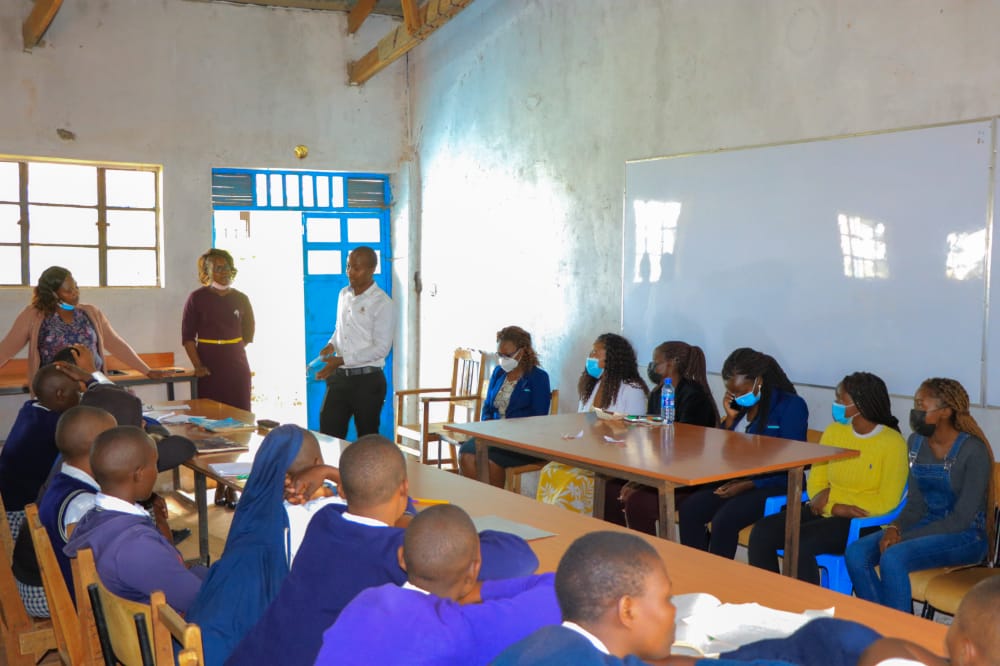
Girl to girl talk when Vivian Moindi visited a local school in the Gusii region to understand the needs of the teenagers.
Ms Naomi Barare, a child rights activist, community health volunteer and legal rights advocate.
“I am a committee trainer on human rights and a member of the court users’ committee in Nyamira County. As community health volunteer, collect data from my clients. I share basic health information including on COVID-19 prevention measures, hygiene and follow up on expectant and lactating mothers,” she said.
“We serve on the court’s committee. Part of our duty is to determine how best to protect the dignity and privacy of the minors whose cases are coming up for mention or hearing before the courts,” she says.
Ms Barare, who works on a voluntary basis, says the use kangaroo courts in defilement cases has proven a major obstacle to justice. This occurs due to informal arrangements between the families of the victims and the perpetrators.
“The families are given money and told to drop cases. Sometimes they are promised a better life or some business opportunities in return for their silence and complicity in the injustice their child has suffered,” she says.
To ensure cases get successfully prosecuted, she advocates for the state protection of witnesses.
“It is sad that Nyamira County lacks a safe house for SGBV survivors,” she notes.
“The government needs to liaise with hospitals or police stations to have the survivors stay there. This will ensure they avoid close contact with other family members who may tamper with the legal process,” Ms. Barare adds.
“The COVID-19 pandemic has negatively affected many families. The number of such violations is increasing because of financial constraints, non-commitment of parents to their children, cultural erosion, among other factors,” she said.
Ms Barare has dedicated herself to spreading the reproductive health rights message.
Well-informed girls, she says, are more likely to make the right choices about their bodies, including reporting incidents of sexual assaults.
“To protect and prosper our girls, guide them towards realizing potential space in society. Emphasise more on their future in career, education and ethics,” Naomi says.
She is asking Nyamira County government referral hospital to provide a youth friendly SGBV wing.
“Once a defiled minor or a youthful survivor of rape understands that the environment is friendly, he or she may open up to share their experience and other concerns she may have,” says Ms Barare.
Vivian Moindi is a mother of three, a motivational speaker and an educationist.
She has endured the scars of a violent marriage that left her broken and a divorce.
“Getting married at a young age seriously limited my voice and career options. My place was in the kitchen and bedroom,” says the teacher.
“I constantly lived on the edge, in and out of a violent and abusive marriage that laid a heavy physical, emotional and spiritual burden on me,” she recalls.
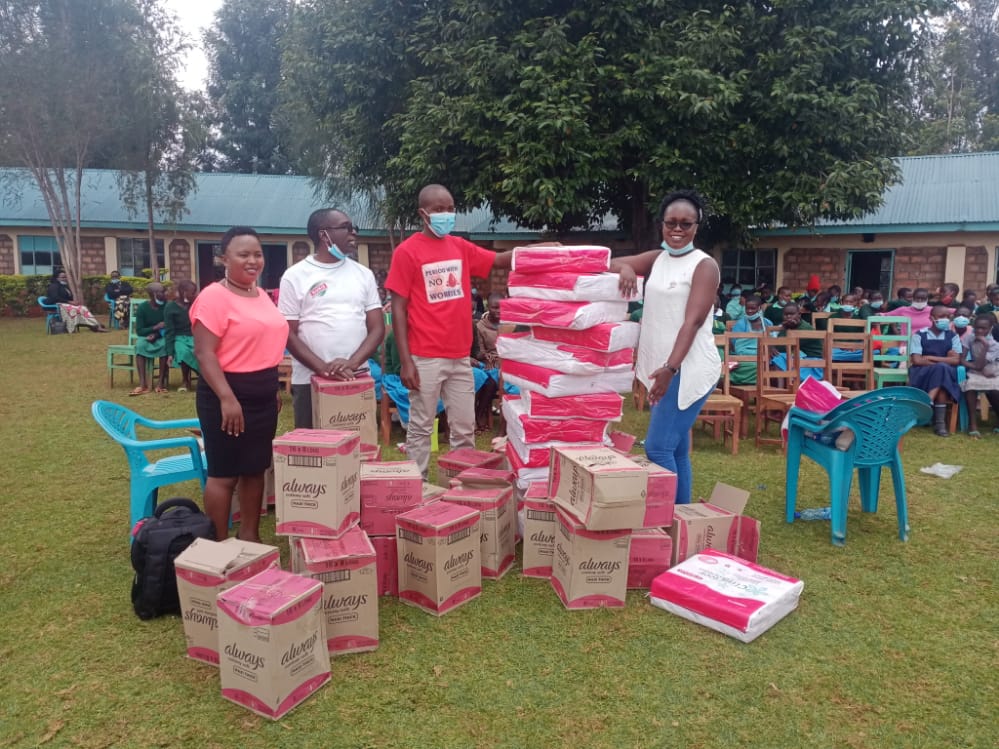
Vivian Moindi preparing to distribute sanitary towels to teenagers.
Her first degree studies would take 11 years to complete.
“The violence in our marriage would hit a peak whenever I raised any issues around my studies and career. I would often pack and leave for my parents’ home, only to return after pleas for forgiveness from my former husband,” she says.
Vivian finally recollected herself after an acrimonious divorce. She won a scholarship for a master’s degree in earth and space physics at the University of Nairobi.
“My dreams had been buried for 10 years as a housewife. I now aspire to reach the moon,” a confident Ms Moindi says.
She is the founder of Raising Teens Kenya (RTK).
It is not easy to get teens to talk about their challenges.
“Most teens are not ready to open up because they are afraid of ridicule, judgement and punishment. It takes time to build their confidence to speak out but when they do, we do what we can to address their challenges,” she says.
Her organisation is so far handling the return of 15 girls to school. RTK recently rescued two girls from early marriages.
“Seven are in primary school with six in secondary school. Two delivered babies in July and August,” she says.
The students had abandoned their studies to get married to their boyfriends residing in Kisii Town.
“They got married some time after schools closed due to health concerns over the pandemic,” she says.
“When the matter came to my attention, I notified my partners and we made arrangements to get them out. Unfortunately, they had already conceived,” adds Vivian.
“We reported the matter to the police, but the suspects fled. Unfortunately, the girls were living with these suspects in town and never knew the suspects’ rural homes,” she says.
RTK secured permission for a small nursing station in the school of the teen mothers.
“We have made arrangements with the school to create a nursing room for them to breastfeed and take care of their babies while we continue counselling them. We hope to see them resume their studies next term,” says Ms Moindi.
As a career coach and parent, Ms Moindi understands the challenge faced by teens from poverty-stricken backgrounds.
RTK has so far reached over 1,000 girls with sanitary pad donations and 300 boys with boxers.
She is a strong believer in communication as a tool for improved academic performance and higher moral standards in learners.
“I plan to set up a teen enterprise hub to support girls and boys. I am also working on a project to make reusable sanitary towels. This will help create employment and sustain our pad donation cycle, which is mostly dependent on well-wishers” she said.
