
Blood donor champion seeks to inspire, nurture giving culture
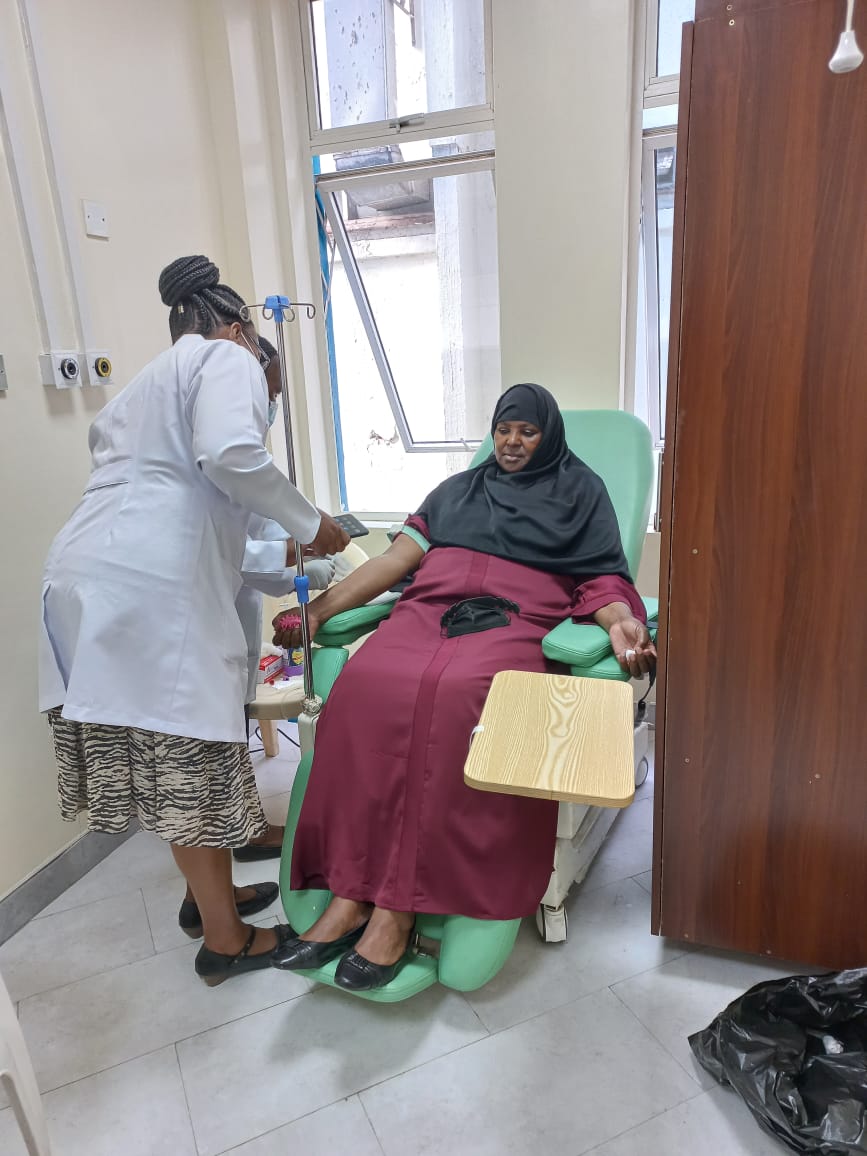
By Aggrey Omboki
Aisha Dafalla’s first memories of donating blood are a little unpleasant.
She was happy to give blood the first time in 1981 as a Form 3 high school student.
“I was very eager to give blood but I was unaware of the requirements for a successful donation exercise,” she recalls.
“When the process ended, I became weak and fainted,” she recalls.
She was revived and promptly forgot about it as an unfortunate but thankfully minor incident.
The need to give blood resurfaced five years later when her friend got an accident and needed an urgent blood donation.
“My friend and colleague back then, Madam Leah, requested me to accompany her to Mater hospital to donate blood for her brother who had been involved in an accident. I had to give blood as it was the only way to restore here back to life and health, she said.
This time round, the procedure went well and her friend got the precious pint she required to undergo an operation.
“My second donation experience was good and it opened my eyes on the importance of blood donation,” she says.
From that time, a generous spark was ignited in the mother of three, who has gone on to donate blood 66 more times.
“I have been donating blood regularly since then, starting with once a year, twice and now I am at three times a year,” she says.
At an awe-inspiring 68 donations, Aisha is Kenya’s female leading blood donor.
For Aisha, giving blood has become a mission to save lives. She intends to pursue it until she hits the age of 60.
“For me, giving blood is giving life to those in need. I cannot fully explain how happy and satisfied the process makes me feel. It is always great to know that I have saved lives with a priceless commodity,” says the devout Muslim, peace campaigner and community development advocate. “It gives me lots of satisfaction,” she adds.
She reveals that she took breaks to give birth and also breastfeed her three children.
“I have taken regular breaks when I am expectant and during breastfeeding periods,” says Aisha.
Her family has also joined in the generosity, with her husband and son also actively donating.
“My husband has now appreciated the importance of donating blood and now accompanies me for the blood donation sessions and he has since become a regular donor. My 21 years old son has since become a regular blood donor since when he attained the age of 19,” she says with a smile.
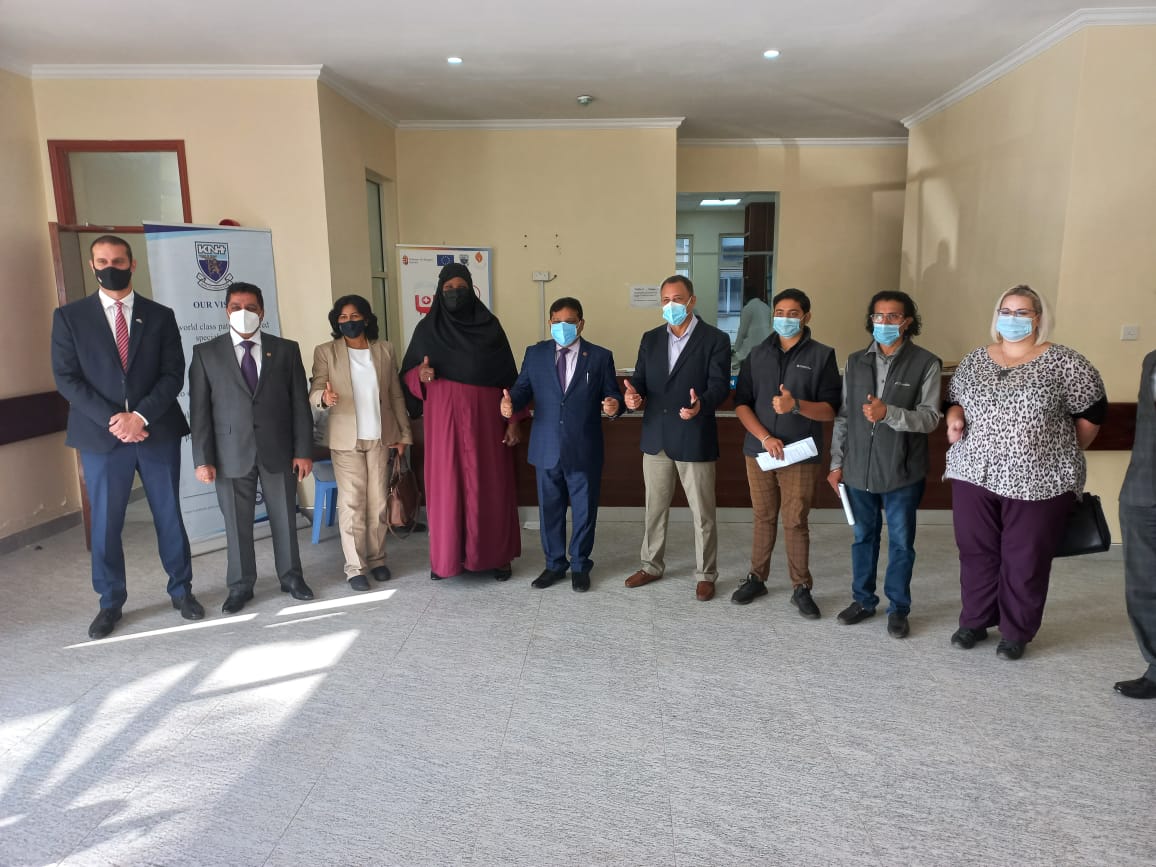
On February 11, 2021, Health Cabinet Secretary Mutahi Kagwe toured the National Blood Transfusion Centre in Nairobi.
During the occasion he awarded certificates of recognition to Mrs. Aisha Dafalla and Mr. Kennedy Sanya for their selfless service of saving lives through donation of blood since 1981 and 1982 respectively to date.
Kennedy Sanya nation’s leading donor has donated 91 times to date while Aisha, who has gone on to donate blood despite initial objections from her parents, has so far donated 64 times.
During the occasion, the two were also appointed as Kenyan ambassadors for blood donation.
Other luminaries in attendance included Principal Secretary Susan Mochache, acting Health Director General Dr Patrick Amoth and the new head of the Centre Dr Nduku Kilonzo.
Her passion to save lives through blood donation has seen take part in the the Red Cross blood donation campaign.
Aisha’s blood donation drive has gone online in an extended bid to create awareness on the need to give blood.
“We have a Facebook page called the Aisha Dafalla Foundation which we use to send appeals for blood donations. These are mostly on behalf of people who need urgent blood transfusions. More than 20 people have benefited from our online blood donation appeals,” she says.
Why should we give blood? A robust, sustainable blood system is a crucial component of every health care system.
Safe blood and blood products are required for health care services that include surgeries, treatments for cancer and other acute and chronic medical conditions.
Blood also plays a major role in childbirth, trauma care, and organ transplantation procedures.
In Kenya however, the blood donation scenario is less than appealing.
The country needs an approximate 1,000,000 units of blood annually.
In 2020, the Kenya National Blood Transfusion Service only managed a total of 164,275 units of blood or 16% of the 1 million units the country needed.
The amount is significantly below the annual target as per World Health Organization (WHO) recommendations.
KNBTS faced a similar deficit in 2019.
Celebrating the pair in September 2019, at an award ceremony to honour them then Health CS Sicily Kariuki said the need for blood will go up as the country rolls out Universal Health Coverage (UHC).
The CS said it would be possible to bridge the gap in blood bank stocks if just two percent of the population donates blood.
“We need at least 1.5 to 2 percent of Kenya’s population to donate blood every year. Science shows that on average a healthy man can safely donate 4 times a year and a woman every three times a year, hence it is possible to meet the blood unit requirements if we pull together,” she said.
To stay healthy, Aisha maintains a simple diet filled with fruits, vegetables, water and protein. She also adheres to a fitness regimen that includes long walks.
“I have learnt that one needs to be healthy to ensure the safety of his or her blood. I try to keep whatever is on my plate as natural as possible, and take lots of water. I will also spend quite a bit of time jogging and taking long walks. That way, I am able to stay healthy and active,” she says.
In her drive to spread the blood donation message, Aisha is particularly keen to see more young women also become blood donors.
“Contrary to popular myths, healthy women of childbearing age can still donate blood. This is despite the fact that they lose some blood during their menstrual periods,” she says.
According to the donation champion, women can donate after four months or 120 days, compared to men who can do it after 90 days.
“Women can donate, only that our maximum is three times a year. I encourage both men and women to donate at least thrice a year so that we overcome the national blood shortfall. This is one of the best ways to give back to our communities,” she says.
The following people are not eligible for blood donation:
l Patients living with HIV, Hepatitis B or C, Syphilis
l Pregnant and breastfeeding women
l Intoxicated or drunk individuals
l People who have got a piercing or body art done during the last 6 months
l Type 1 diabetes patients
l Blood cancer patients or patients with lymphoma or leukaemia
l Patients having coronary heart disease or those who have suffered a heart attack
l People who have a fever or other active infections
Before you donate:
1. Stay well hydrated and do not miss meals
2. Get a medical exam to get your blood pressure and haemoglobin levels checked.
3. Inform the medics of any medication you are currently taking.
After you donate:
1. Have a snack
2. Get adequate rest.
3. Avoid heavy lifting or strenuous exercise.
Mr Omboki is a journalist whose specialisation is Health.
