
Engineering: Progress is positive even with low numbers, as women join the once male-exclusive career
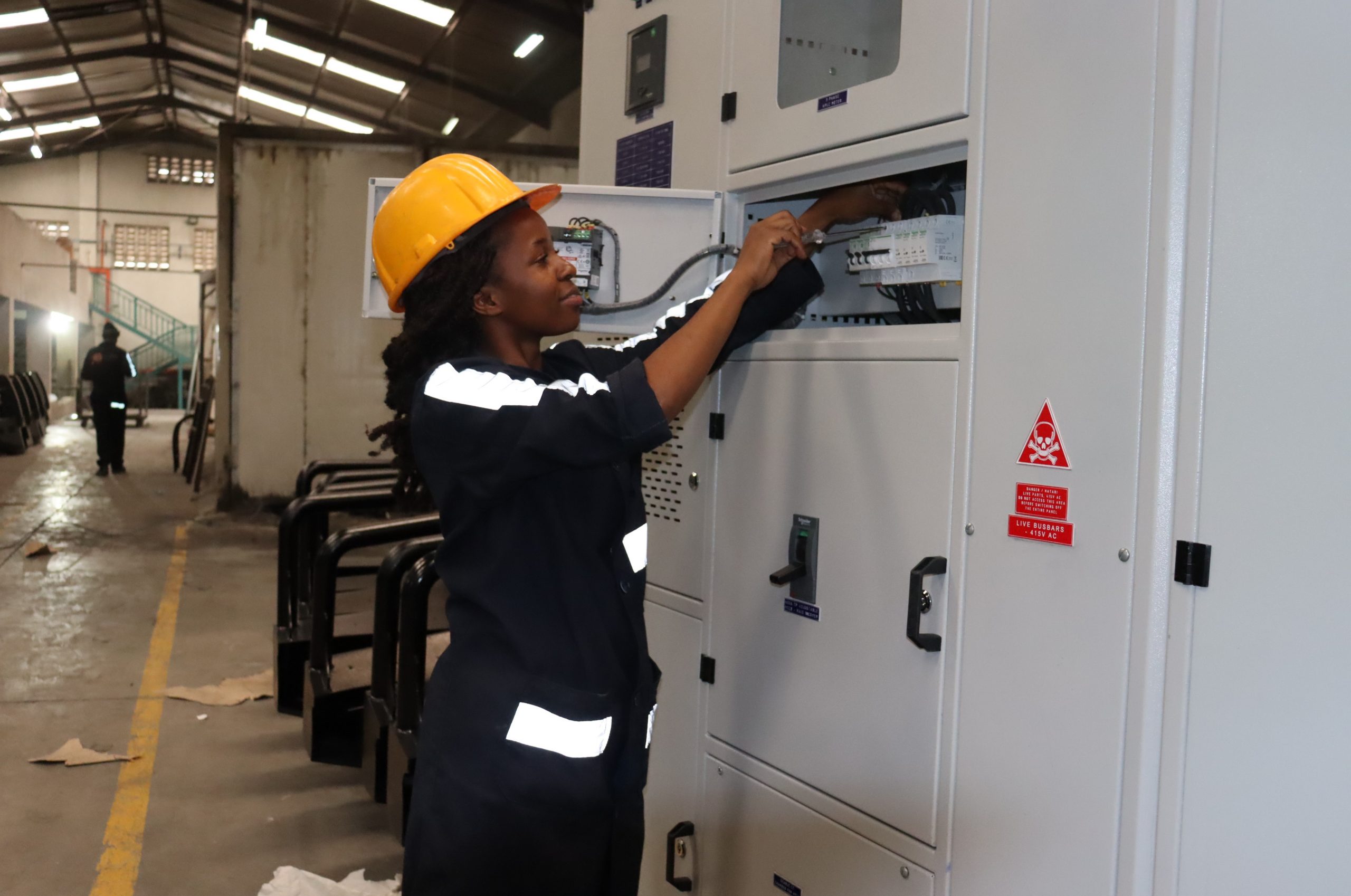
Snaida Mmbone, an engineer at Duff Engineering at work. Photo: Duff Engineering
By Mrs. Rose Muchichu
Mrs Rose Muchichu
As the world seeks to address gender parity, there are several professions where women remain underrepresented. Engineering is one of those industries. Despite efforts being made to increase the number of women working in this sector, a smaller percentage of all professionals working in engineering are women.
As of 2021, there were 9,709 engineers in Kenya. Only 798 were female, representing a paltry 8.2 per cent, according to the Institution of Engineers of Kenya.
Fewer women than men in this trade has been attributed to a tradition, where girls are expected to go for “softer” art courses such as history, languages and music, whilst boys are encouraged to take on sciences. Although there are roughly equal numbers of boys and girls taking science, technology, engineering and maths (STEM), the former are generally more.
Albeit there are less than 1,000 of women engineers, the number has been on the rise over the last few years. Efforts to encourage more women to join the profession have resulted in an increment by 11 per cent in comparison to preceding years. In 2017, only eight women were registred consulting engineers against 355 men. Eighty six women and 1,597 men were registerd as professional engineers. In the same period, 757 women and 8,639 men were listed as graduates as per the statistics of the Engineering Board of Kenya, published by the Daily Nation.
While female engineers are still the minority in the field, many have succeeded in the industry. They have broken stereotypes in the field perceived to be masculine.
The trend is attributed to several factors. According to Caroline Koech, Chief Executive Officer, Schneider Electric East Africa, the rising number is due to the encouragement from education sector actors, who are asking women to penetrate into the STEM subjects.
“Engineering companies should set up programmes to motivate greater numbers of women. This may involve working with colleges or other organisations to create awareness of the different jobs and career options in engineering and manufacturing,” Mrs Koech said.
She also rooted for apprenticeship with sponsored vocational training or further education to attract interested and talented young women.
“This requires supportive management teams with flexible attitudes. With many women trying to balance a career with motherhood, there is a demand for flexible working options, such as the option to work more hours over fewer days, part-time or working from home,” pointed Mrs Koech.
With the emphasis on the high-tech fourth industrial revolution, there has never been a better time for girls and women to get into engineering than this. It also requires perseverance of women.
Ms Snaida Mmbone, a senior electrical engineer at Duff Engineering Limited is the only woman at the company.
“It is discouraging sometimes to be the only one at the company; I encourage women to join us in ending gender imbalance in the workplace,” says Snaida.
She adds: “What women need to succeed in this male-dominated profession is simple- confidence. Whereas men have a lot more bravado, we, women downplay our skills and experience. We can be more risk-averse, and so we might not make a big career leap because we are afraid, not ready or shy. Men tend to take those risks and often outshine us.”
She observes that men in the profession can help bridge the gap by encouraging women to join them.
In addition to learning institutions, companies and professional organisations need to create a conducive atmosphere for all towards a stronger profession.
Mrs. Muchichu is the Director of Communications, Duff Engineering Limited.
Email: rose@duffengineering.co.ke
